
Service · 04
Osteopathy for endometriosis
I combine in-depth knowledge with precise manual techniques and a relationship built on trust.
Diagnosed with endometriosis – what now?
Endometriosis and adenomyosis can have a significant impact on everyday life. Many sufferers experience severe period pain, chronic lower abdominal pain, a painfully bloated abdomen (“Endo Belly”), cycle-related back or pelvic pain, pain during or after sex, and pain when passing urine or having a bowel movement. Difficulty conceiving may also be linked to endometriosis.
Despite this wide range of symptoms, it often takes many years to reach a diagnosis. It is not uncommon for pain to be dismissed as “normal” for a long time, or for the symptoms not to be taken seriously.
I am familiar with these challenges not only from my daily work as an osteopath, but also from my own experience: I myself live with endometriosis and adenomyosis. This is precisely why it is particularly important to me to listen carefully to people with endometriosis, to take their symptoms seriously and to support them with expertise and empathy.
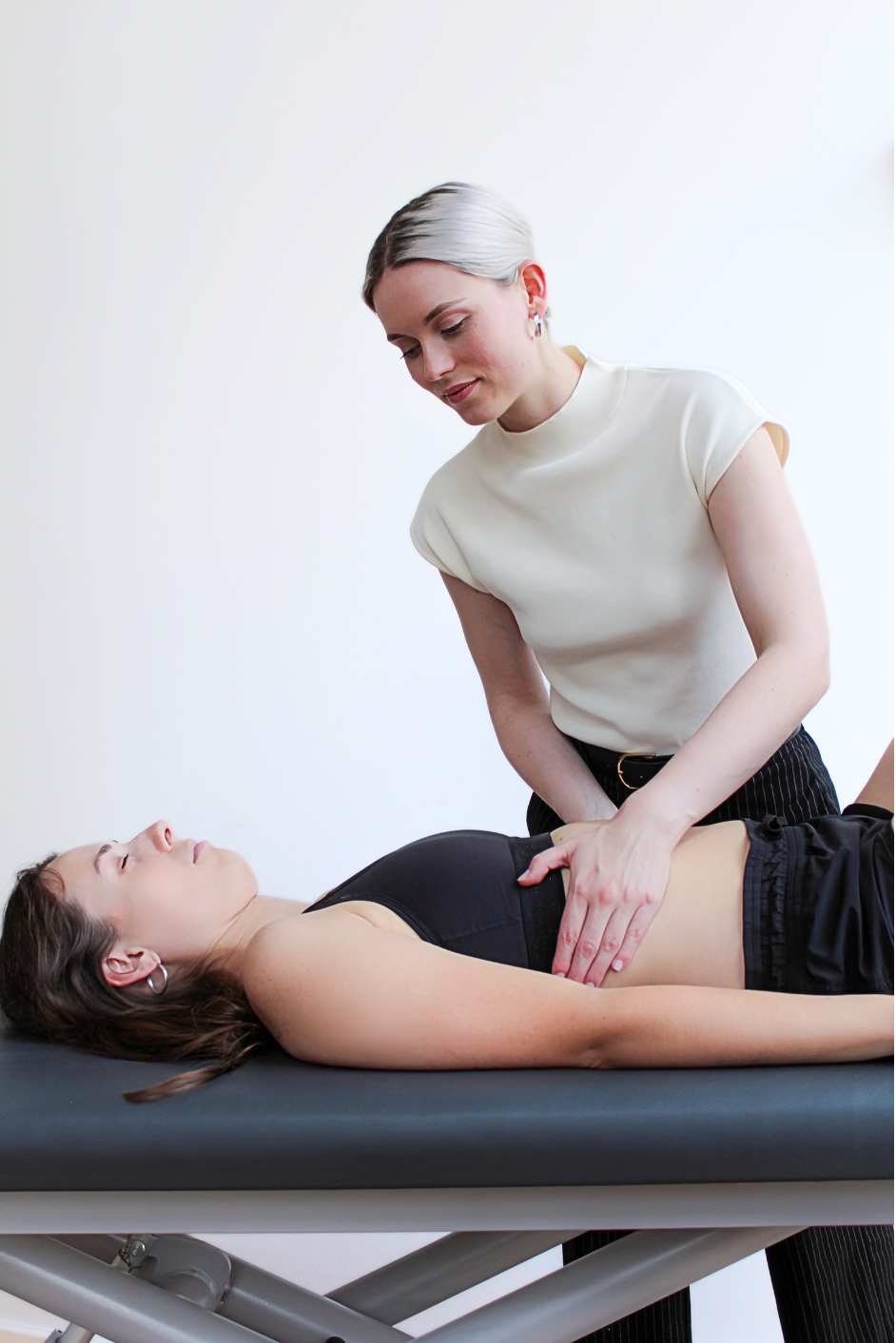
Osteopathy can be a valuable complement to gynaecological treatment and, where necessary, other medical treatments. The aim of the treatment is to address functional limitations and tension in the abdominal and pelvic regions, as well as in the surrounding structures. These include, for example, the abdominal wall, the pelvic floor, the diaphragm, scar tissue and the lumbar spine. Depending on the individual’s situation, this can help to alleviate symptoms and improve the mobility of various tissues.
From personal experience
You will be listened to.
In my practice, you don’t have to justify or explain your pain. I take the time to listen to your story and, together with you, develop a personalised treatment plan that suits your situation.
It is important to me to create a safe space where you feel taken seriously, understood and well supported.

Background
What are endometriosis and adenomyosis?
Endometriosis and adenomyosis are among the most common gynaecological conditions, yet they often go undiagnosed for a long time.
In endometriosis, tissue similar to the lining of the womb grows outside the womb – for example, on the ovaries, the peritoneum, the bowel or the bladder. This tissue reacts to hormonal changes during the menstrual cycle and can cause inflammation, scarring and adhesions.
In adenomyosis, tissue resembling the endometrium grows into the muscular layer of the uterus. Common consequences include heavy or prolonged bleeding, as well as severe cycle-related pain.
As endometriosis and adenomyosis are complex chronic conditions, many affected individuals benefit from personalised, multimodal treatment. Depending on the situation, gynaecological care, pain management, exercise, nutrition, psychotherapy and osteopathy can all be valuable components of a treatment plan.
How osteopathy can help
Treatment approaches
Osteopathy can neither cure endometriosis or adenomyosis nor treat their underlying causes. However, as a complementary therapy, it can help to support the body’s functions and manage symptoms.
Mobility in the abdominal and pelvic regions
Endometriosis, surgery or scarring can affect the mobility of various tissues. The aim of treatment is to identify functional restrictions of movement in the abdominal and pelvic regions and to treat them using osteopathic techniques.
Pelvic floor and musculature
Chronic pain often leads to increased tension in the pelvic floor as well as in the abdominal, back and hip muscles. Targeted manual techniques can be used to treat this tension and support tissue function.
Post-operative care
Following surgery for endometriosis, osteopathic treatment can help to maintain or improve the mobility of scar tissue and surrounding structures.
Autonomic nervous system
Chronic pain can place a lasting strain on the nervous system. Many people find the gentle manual techniques of osteopathy relaxing and relieving. The aim of the treatment is to support the body’s natural regulatory processes.
Please note: Osteopathy is not a substitute for gynaecological diagnosis or medical treatment. If endometriosis or adenomyosis is suspected, a gynaecological assessment should always be carried out. I view osteopathy as one component within an individualised and interdisciplinary treatment plan.